

Overview
This agent performs automated root cause analysis on 3GPP LTE-style device logs: eNB/RRH events, error codes, handovers, and CPRI/HARQ/BLER-style signals. It cross-references logs against a debug reference guide to decode sub-codes, correlate events across subsystems, and produce RCA reports—work that would otherwise require a senior wireless engineer to manually sift through thousands of timestamped entries. Powered by the Device Log Analysis template in Agent Composer—available for Enterprise customers; request a demo for access.Try the Demo
Launch Demo
Analyze 3GPP wireless logs yourself
Running on the production DLA template. Demo queries are cached and sped up for demonstration purposes.
The Problem
When a device or network incident occurs, engineers must manually sift through thousands of timestamped log entries containing cryptic error codes, protocol abbreviations, and vendor-specific identifiers. Root cause analysis requires:- Decoding error codes against reference documentation
- Correlating events across subsystems (eNB-SYS, eNB-MAC, eNB-PHY, eNB-RRC, eNB-S1AP, eNB-X2AP, UE-MAC/UE-RRC)
- Building timelines to establish causality between failures (e.g. CPRI degradation → handover failures → call drops)
- Identifying patterns across multiple failure events
- Distinguishing symptoms from root causes
How It Works
In production
What you do: Upload a log file and optionally additional context (e.g. a debug reference guide), then ask a query—for example “Why did the calls drop?”. What happens automatically: A multi-agent implementation takes over. The system parses the log, builds a searchable database from the log and reference files, runs root cause analysis, and produces outputs. Pipeline stages: Uploading files → parsing logs → building the database → root cause analysis → generating the report. Outputs: The agent delivers a detailed RCA report (executive summary, timeline, decoded errors, recommended actions) and can generate visualizations (causation timelines, degradation charts). Auditable: Every step is visible—tasks, trajectory, intermediate artifacts, and the final report—so teams can review the analysis and act on findings.In this demo
3GPP Wireless files are preloaded; choose a suggested query and run the analysis.Example Questions
Suggested queries in the demo:- “Why did the calls drop?”
- “When did this problem start?”
- “Was there a problem with RRH:1?”
Output
Example outputs from the three suggested queries: “Why did the calls drop?” — Full-day RCA timeline across 5 correlated metrics: CPRI fronthaul BER on RRH:2, sector temperature, SCTP heartbeat to MME, PSU voltage sag, and handover failures / radio link failures: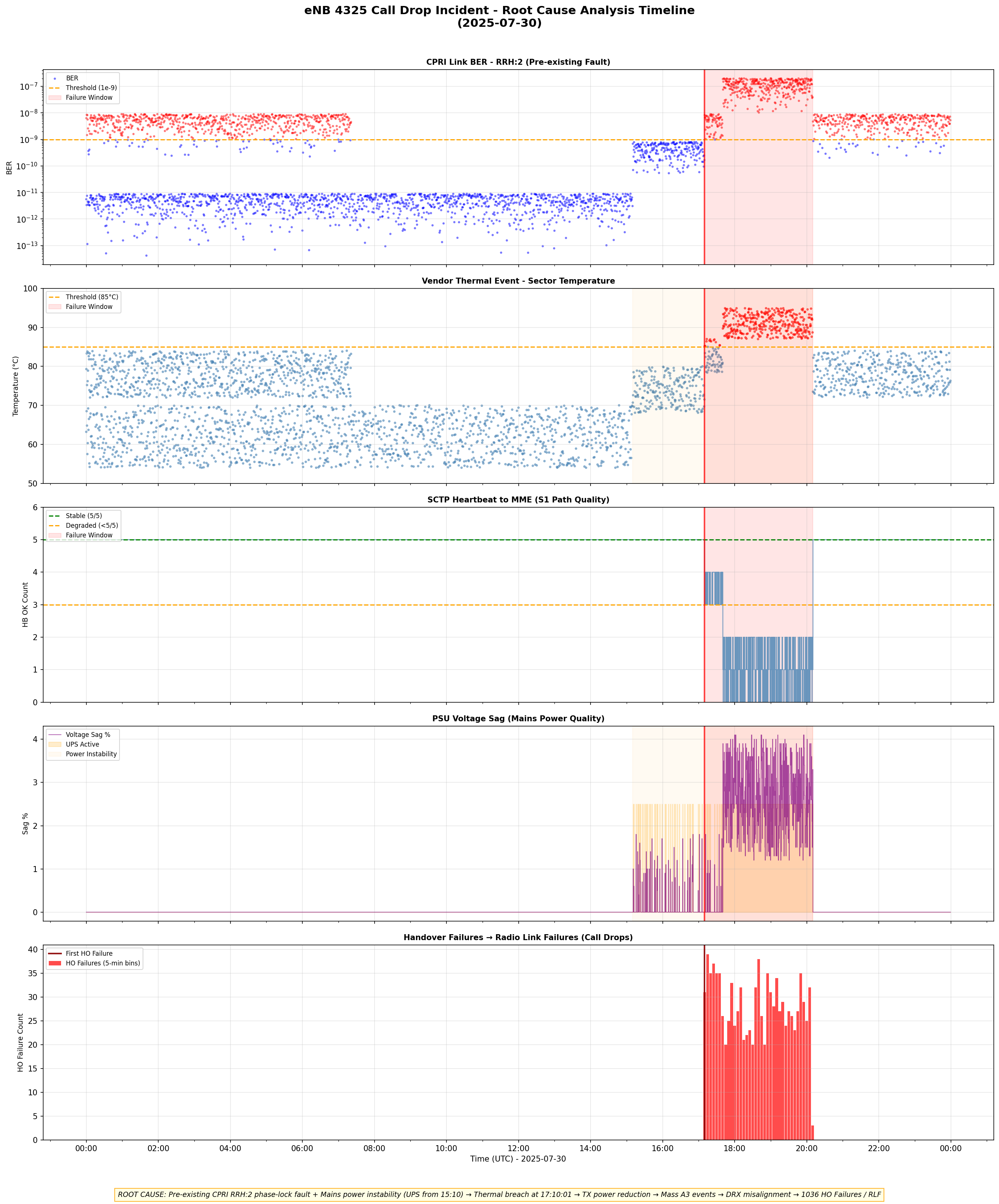
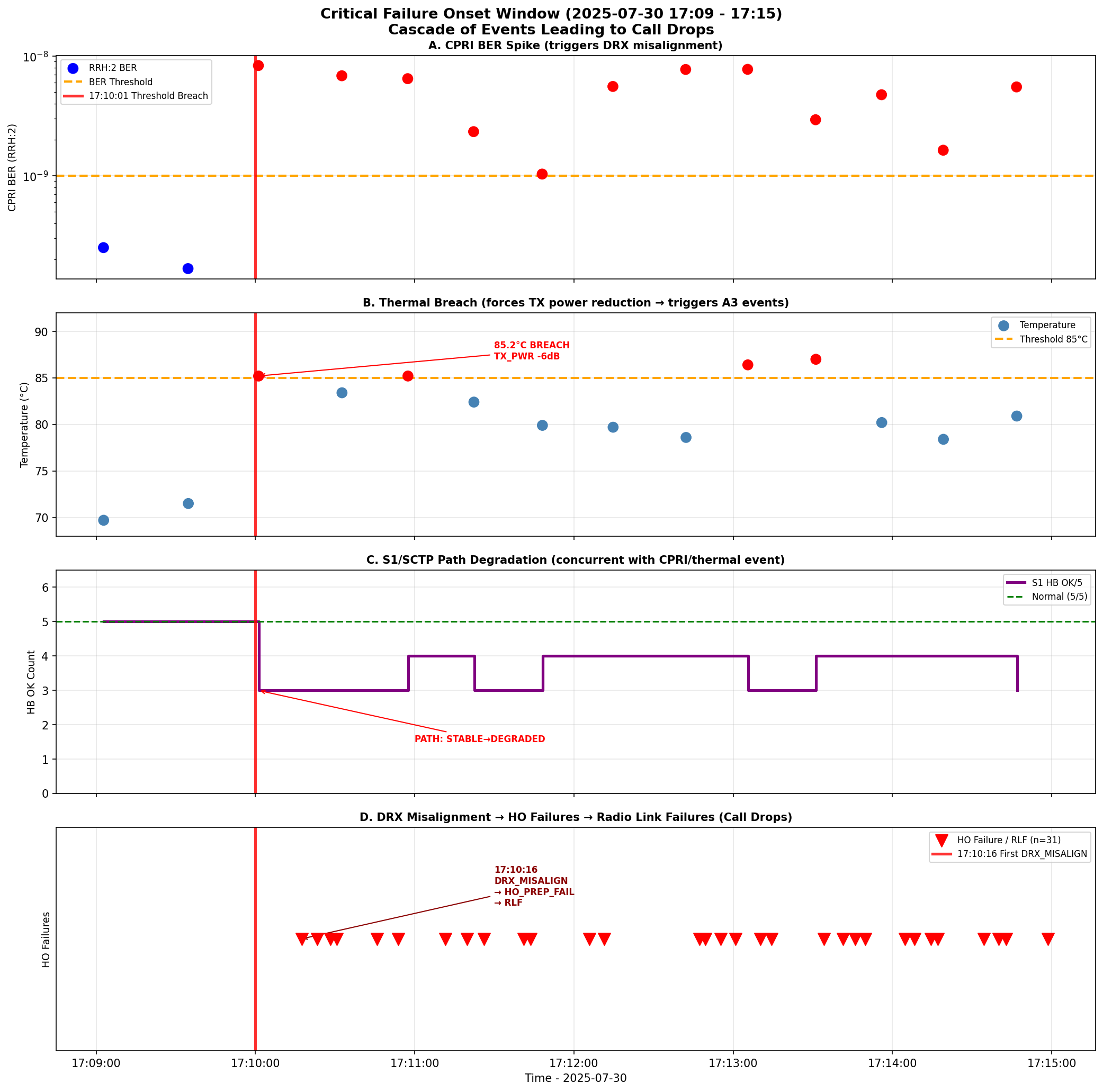
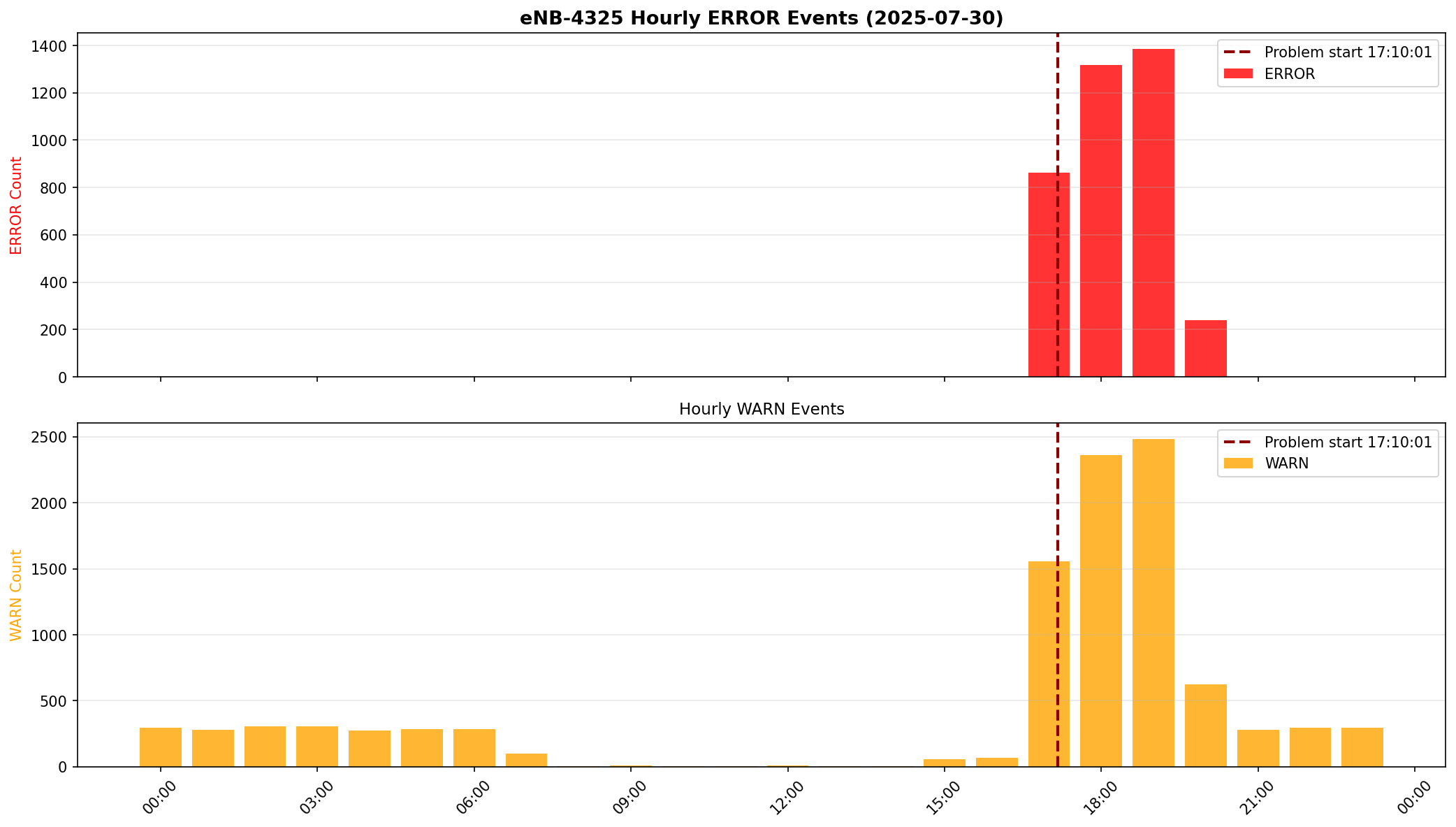
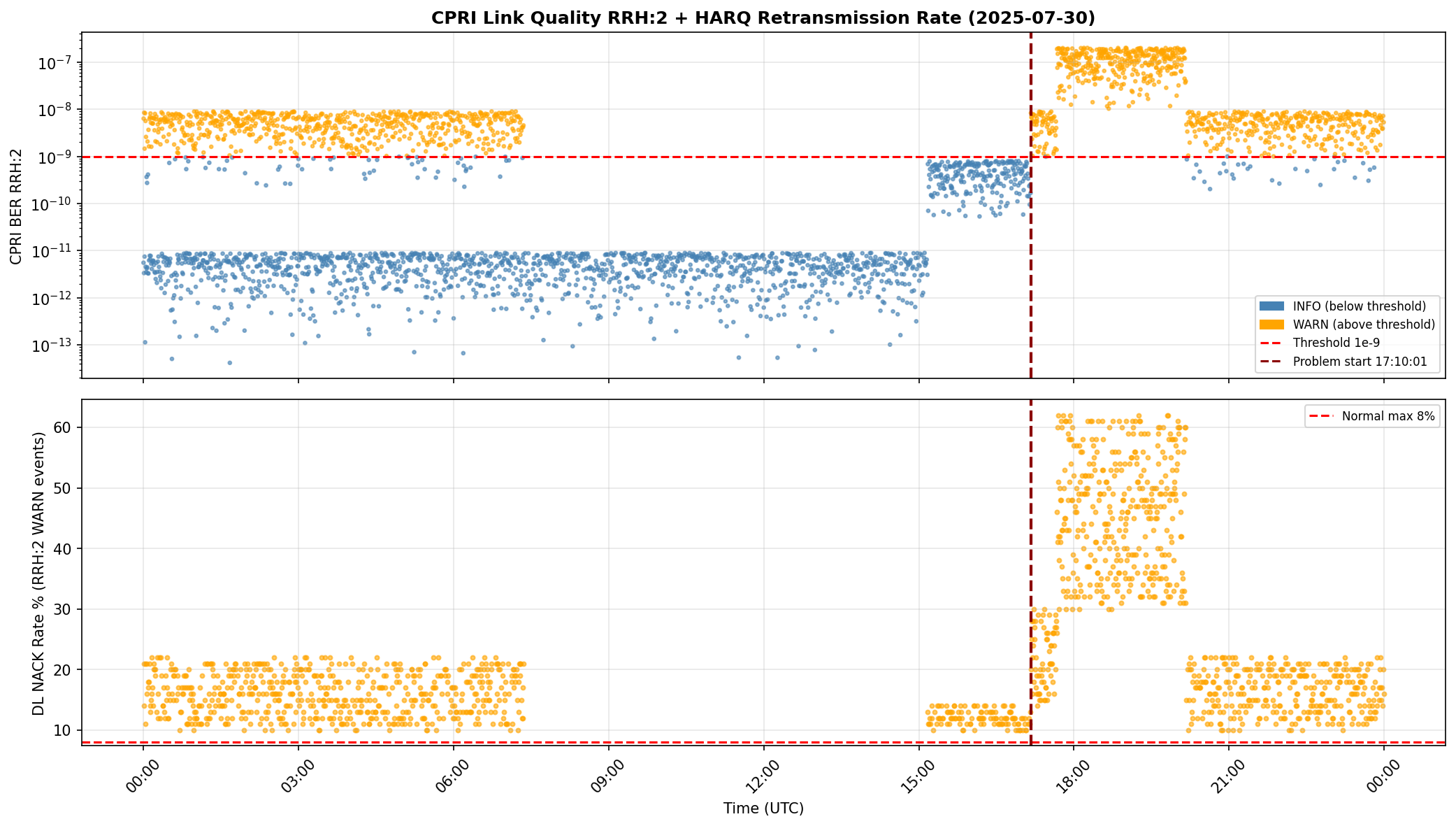
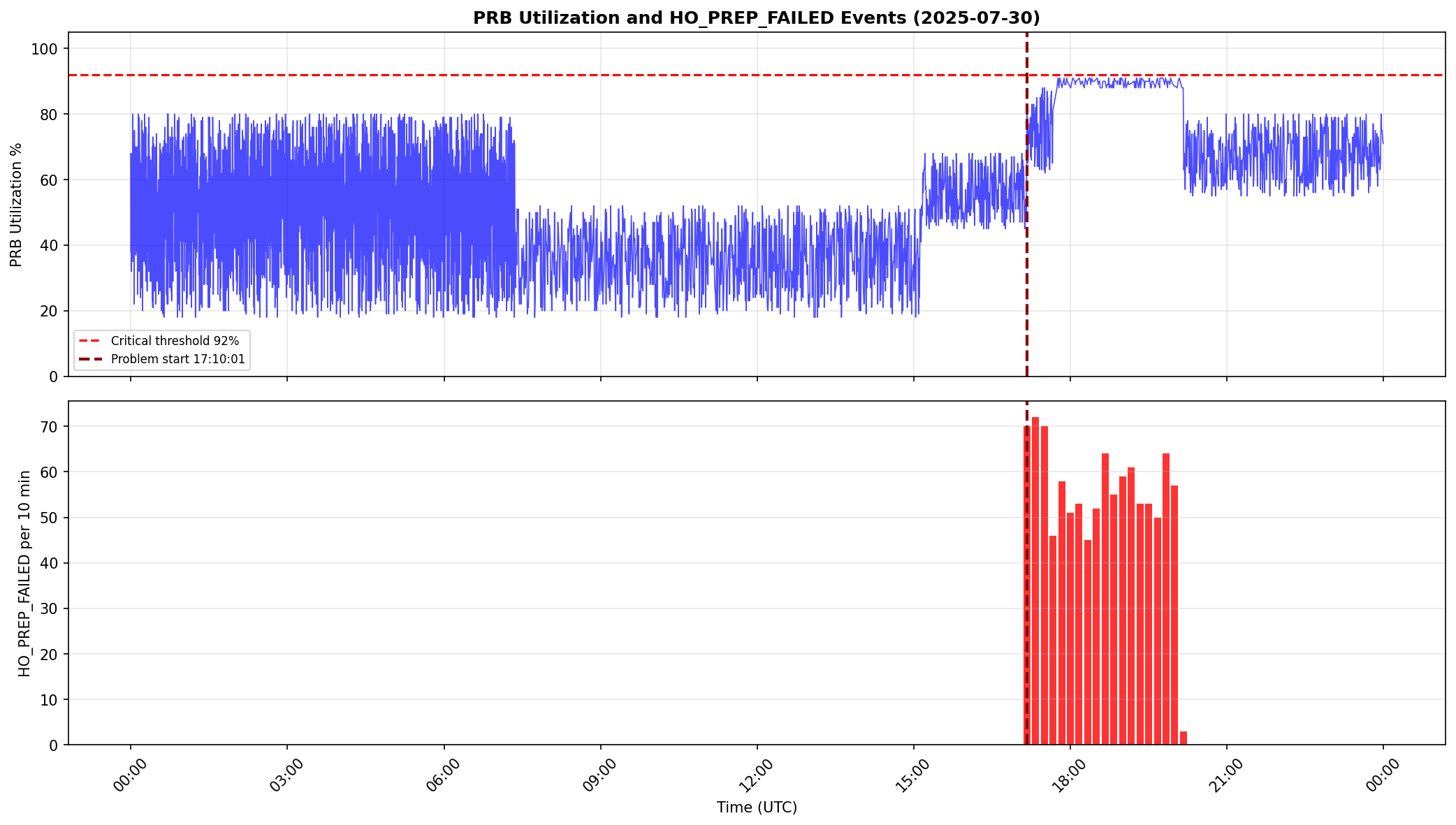
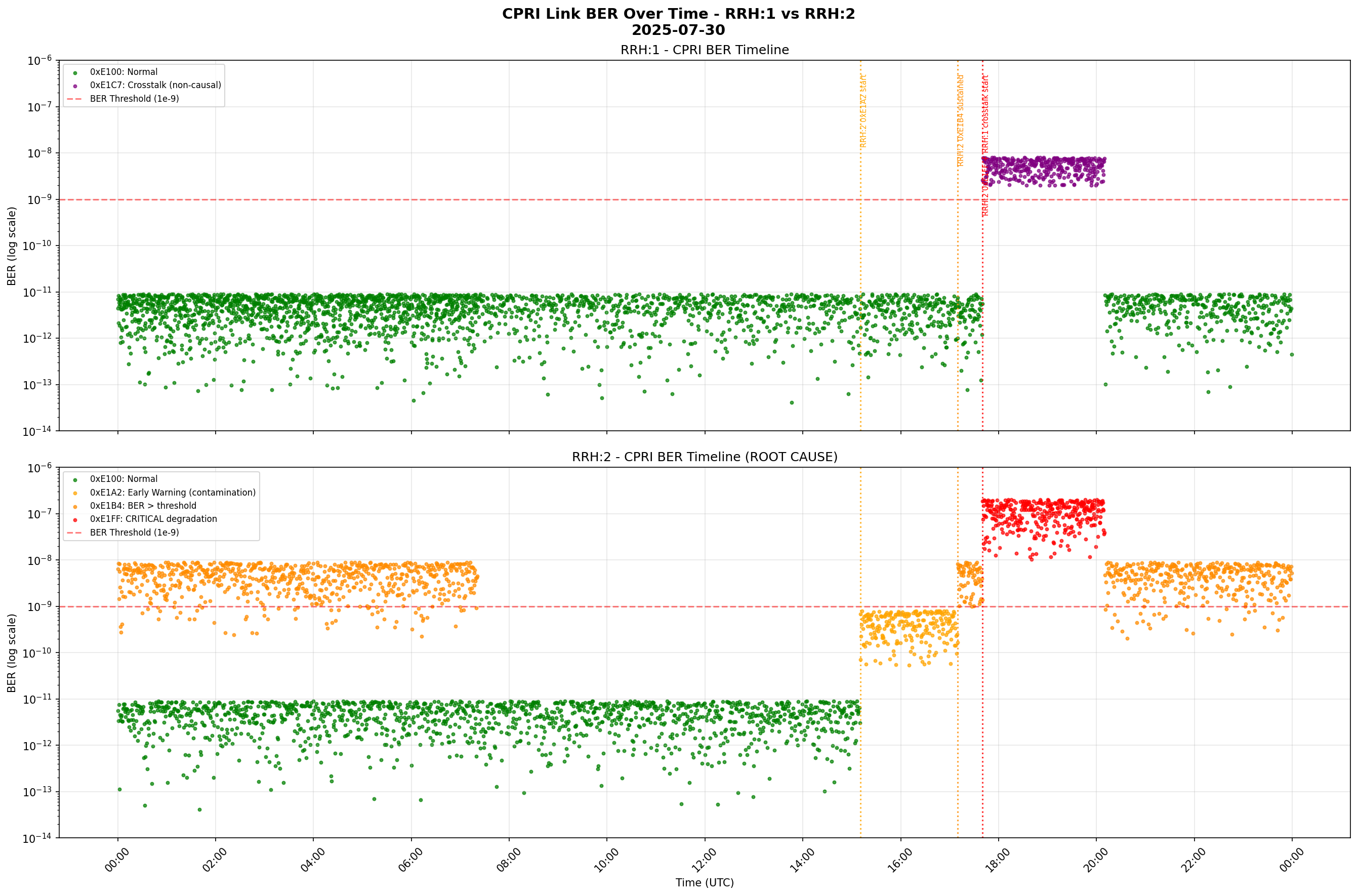
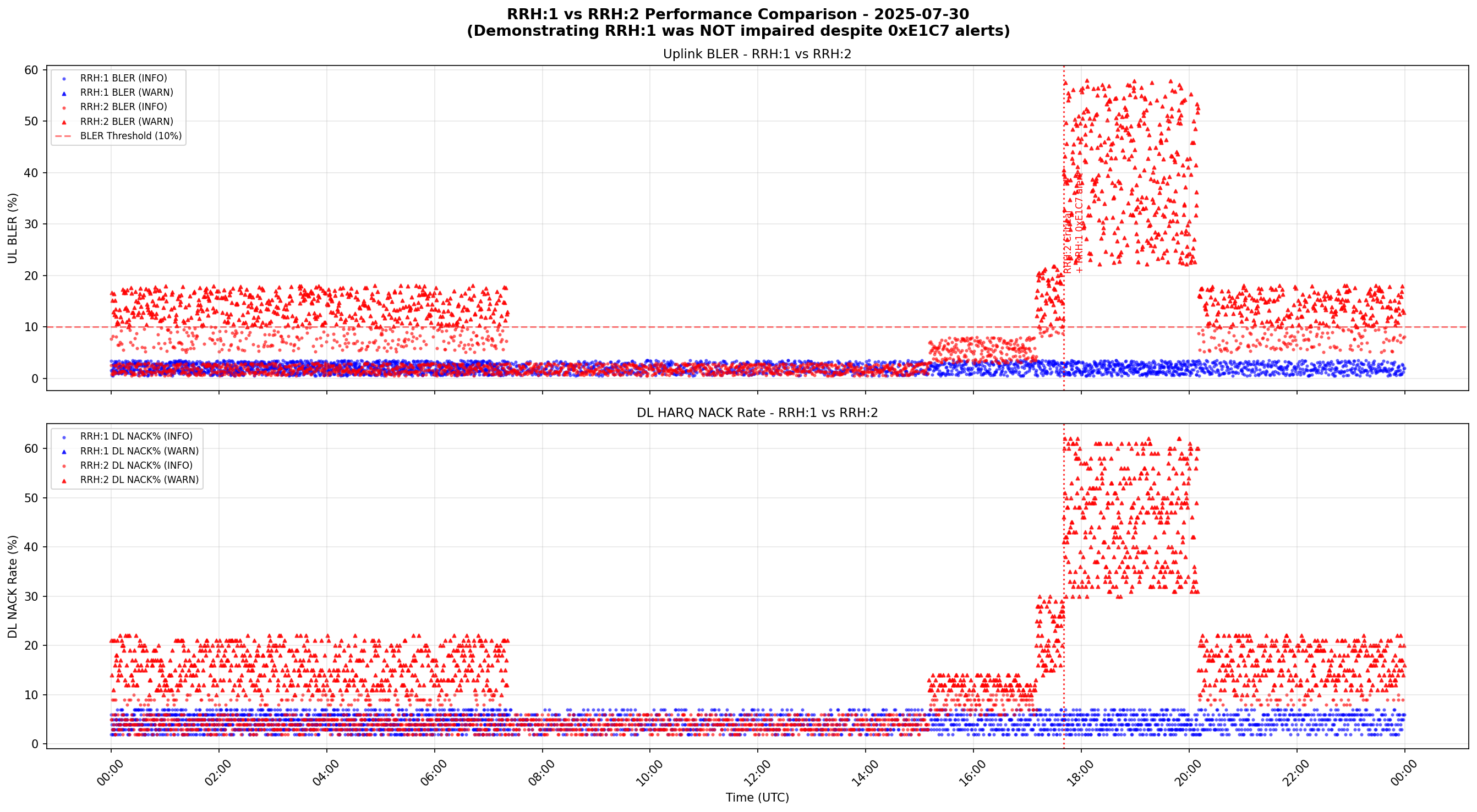
- Executive summary — Root cause (e.g. CPRI fronthaul degradation on RRH:2), secondary factors (DRX misalignment, SCTP/MME, backhaul jitter), and impact (UE counts by failure type: RLF, RRC reject, NAS attach reject)
- Detailed timeline — Phased chronology with decoded log lines (early degradation → threshold breach → handover failures → thermal throttle → congestion and rejects), so reviewers can follow the sequence event-by-event
- Error analysis by UE — Grouped tables (e.g. handover failure → RLF call drops, RRC reject due to congestion, NAS attach reject with cause codes) with timestamps and preceding causes
- Technical explanation — Root cause deep dive and cascade effects (e.g. CPRI BER progression, RF/UL BLER, thermal throttle, ANR staleness and HO prep failure, SCTP/MME overload) with supporting tables
- Answer to original question — Direct answer to the query (e.g. call drop mechanism: CPRI → RF degradation → thermal throttle → HO failures → T304 expiry → RLF) and optional mechanism diagram
- Attached visualizations — References to the generated timeline visuals (system health, call drop causality)
- Recommended actions — Prioritized table (e.g. CRITICAL / HIGH / MEDIUM) with action and rationale for each
3GPP Wireless sample files in the demo
- Device log (
3gpp_wireless_device_log.txt) — eNB/UE failure log (eNB-SYS, eNB-MAC, eNB-PHY, eNB-RRC, eNB-S1AP, eNB-X2AP, UE-MAC/UE-RRC); severity, tags, codes (e.g.RACH_INIT,RRC_CONN_REQ,CPRI_LINK_DEGRADED_0xE1,VNDR_THERMAL_0x4F2A) decoded against the matching reference. - Debug reference guide (
3gpp_wireless_debug_rules.txt) — eNB debug reference (“3GPP LTE eNB Debug Reference Guide”): RRC/NAS, EMM/ESM, S1AP/X2AP, timers, RSRP/RSRQ, vendor diagnostics—paired with the log above.
Learn More
- Device Log Analysis (overview) — General DLA template and all three sample datasets
- ATE Board Validation — Board validation / tester logs
- Mazda Infotainment — Infotainment crash logs
- Getting Started with the Contextual AI Platform
- Agent Composer Templates — Basic Search, Agentic Search, and Device Log Analysis (Enterprise)
- Request a demo